

Case study of high-purity, pollution-free transport of alumina ceramic powder in Zhenjiang, Jiangsu
In the field of alumina ceramic powder material transportation, achieving high-purity, pollution-free sealed conveying has always been a key focus of the industry. A customer faced pain points during production such as material contamination, low conveying efficiency, and dust emissions, urgently needing a stable and reliable pneumatic conveying system to improve process levels. To address these needs, we offer customized pneumatic conveying solutions that address customers' conveying challenges.
Case Background and Client Pain Points
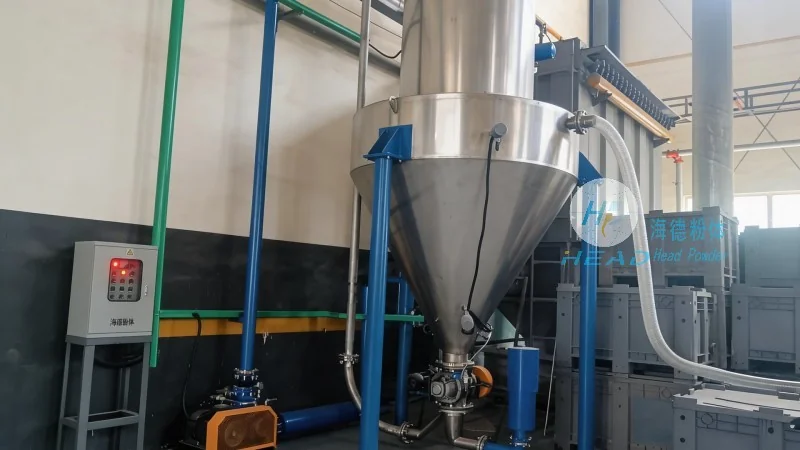
A client is a manufacturer of alumina ceramic powder, whose raw materials require extremely high purity; any trace impurities can affect the final product performance. The original conveying method uses open mechanical conveying, which not only easily mixes in external dust but also generates metal debris due to friction between materials and equipment, leading to pollution. At the same time, traditional transportation methods consume high energy and frequently experience pipeline blockages, resulting in high maintenance costs.
Solutions and product advantages

It adopts a sealed pneumatic conveying system independently developed by Head Powder, powered by compressed air and completing fully enclosed material transport through sealed pipelines. The system's inner wall undergoes special polishing treatment and is lined with wear-resistant materials to reduce friction between the material and the pipe wall, eliminating contamination at the source. It is also equipped with a high-precision air-material separation device and an intelligent control system to enable real-time monitoring and automatic adjustment during the conveying process, helping alumina ceramic powder to flow efficiently in a dust-free and impurity-free environment.
Application Effects

After implementation, dust emissions at the customer's production site dropped to nearly zero, material purity remained above 99.9%, conveying efficiency improved by about 35%, and pipeline blockages decreased by more than 80%. The overall system operates stably and maintenance intervals are extended, helping customers achieve both clean production and cost reduction and efficiency improvement.