

Pneumatic silicon carbon powder conveying solution
During the production and use of silicon carbon powder, many enterprises face issues such as low material conveying efficiency, severe dust pollution, frequent equipment blockages, and high maintenance costs. Traditional mechanical conveying methods are difficult to adapt to the fine characteristics of silicon carbon powder, easily causing material loss and production line downtime, which affects overall production capacity and operational safety.
Material Characteristic Analysis

Silicon carbon powder is a powder material with high hardness, high wear resistance, and fine particle size. It has poor flowability, easy agglomeration, and significant wear on equipment. Their particles have irregular shapes and high surface energy, which can generate static electricity during transportation and adsorb onto pipe walls, increasing conveying resistance and increasing the risk of pipeline blockages.
Product solution introduction
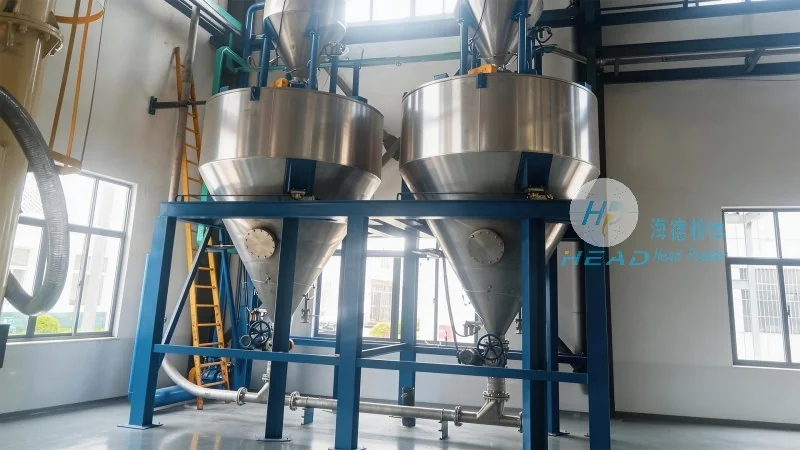
Head Powder has launched pneumatic conveying system equipment for silicon carbon powder tailored to the special material properties of silicon carbon powder. This system uses the principle of pneumatic conveying under either positive or negative pressure, achieving automated transfer of powder materials through sealed pipelines. We offer full-process customization services from solution design, equipment manufacturing to installation and commissioning, helping systems seamlessly integrate with customers' existing production processes.
Solutions and customer benefits

To address customer pain points, Head Powder's silicon carbon pneumatic conveying solution has achieved the following improvements: fully enclosed conveying to prevent dust leakage and maintain workshop cleanliness; Wear-resistant elbows and low-resistance pipeline designs reduce equipment wear and clogging rates; The intelligent control module enables more accurate adjustment of conveying parameters, reducing manual intervention; The modular structure facilitates subsequent inspections and maintenance, effectively reducing long-term operating costs.