

Pneumatic conveying solution for glass fiber reinforced plastic pellets
During the production and processing of glass fiber reinforced plastic pellets, companies often face transportation challenges caused by material characteristics: traditional equipment is prone to pellet damage, severe pipeline wear, frequent system blockages leading to downtime and maintenance, and dust emissions that affect the production environment and operator health. These pain points not only reduce production efficiency but also increase operating costs and maintenance difficulties.
Material characteristics
Glass fiber reinforced plastic particles are composite material particles characterized by high hardness, rough surfaces, high brittleness, and susceptibility to static electricity and dust. They have irregular shapes and poor flowability, causing high wear on the inner walls of pipelines during transportation. They are also prone to pipeline blockages caused by bridging or adhesion, placing strict requirements on the wear resistance, sealing, and anti-blockage capabilities of the conveying system.
Product Introduction

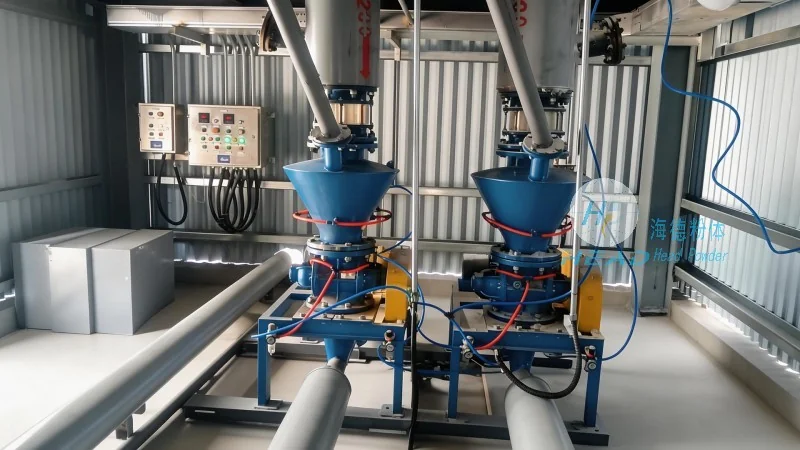
Head Powder offers customized pneumatic conveying solutions for glass fiber reinforced plastic pellets based on the above material characteristics, along with dedicated conveying system equipment. This solution adopts a fully enclosed pneumatic conveying method, combined with modular design, allowing parameter adjustments and layout optimization based on customer site conditions (such as capacity, conveying distance, and workshop layout). The core components of the system are made of highly wear-resistant materials and equipped with efficient air supply equipment and intelligent control units, ensuring smooth conveying, low damage, and minimal dust.
Product advantages

To address pain points faced by customers such as wear, blockages, dust, and frequent maintenance, Head Powder Pneumatic Conveying Solutions offer the following solutions: using wear-resistant bent and straight pipes to extend equipment lifespan; Prevents particle damage by optimizing airflow velocity and material-air ratio; Equipped with anti-bridge crossing devices and automatic blockage removal systems to reduce downtime; Integrated pulse dust removal and sealed circuit control for dust emissions. The entire system emphasizes operational stability and ease of maintenance, helping customers reduce overall operating costs.